

When Defective Products Cause Harm, You Don't Have to Prove Negligence
South Africa's strict product liability laws put manufacturers, importers and retailers on the hook for unsafe goods.
South Africans injured by defective products often assume they must prove a manufacturer or retailer was negligent before claiming compensation. In reality, the Consumer Protection Act (CPA) introduced one of the country's strongest consumer protections: strict liability.
Under Section 61 of the CPA, manufacturers, importers, distributors and retailers can all be held liable for injuries or damage caused by unsafe or defective products, even if there is no evidence that they acted negligently. The law applies to everything from household appliances and motor vehicles to children's toys and medical products.
"The CPA fundamentally shifted the balance of power towards consumers," says Kirstie Haslam, Partner and personal injury specialist at DSC Attorneys. "Before the Act, proving negligence could be extremely difficult because consumers had little access to manufacturing or engineering evidence.”
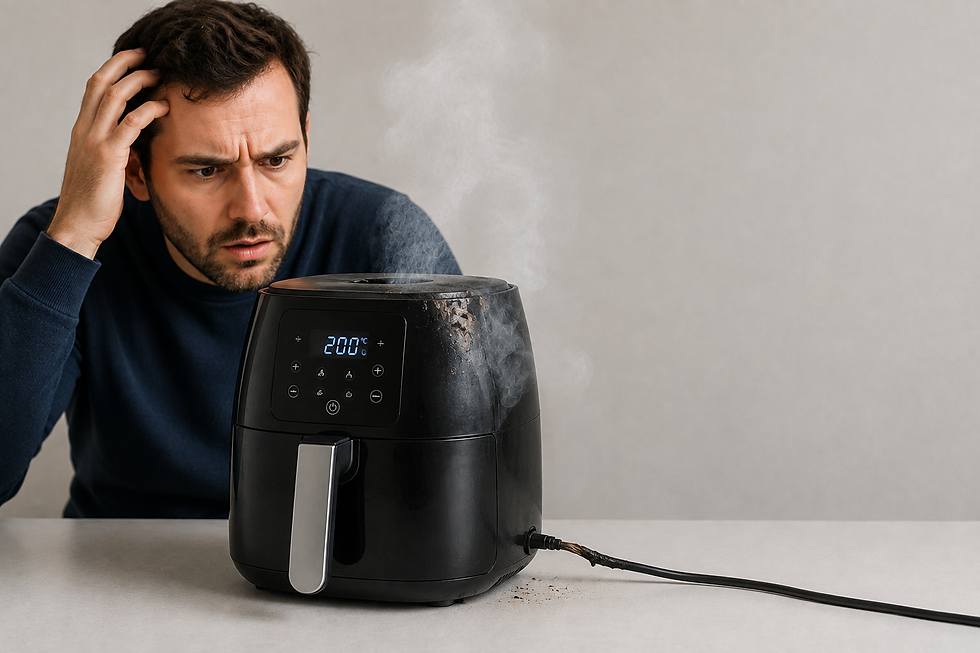
Haslam explains that Section 61 allows consumers to pursue any party within the supply chain jointly or individually, including producers, importers, distributors and retailers, for harm arising from unsafe goods, product defects or inadequate safety warnings. “Today, if a defective product causes injury, the focus is on whether the product was unsafe or defective, not whether someone made a careless mistake."
The courts continue to reinforce this principle.

In Pieterse and Others v Organic Synthesis (Pty) Ltd and Another (2024), the Gauteng High Court confirmed that Section 61 creates a strict liability regime and that injured consumers need not exhaust other remedies under the CPA before approaching the courts for damages arising from defective products. The judgment reaffirmed that personal injury claims can proceed directly under Section 61.
More recently, the Western Cape High Court considered the scope of Section 61 in Fitzpatrick and Another v Latsky NO and Others (2026). Although the claim ultimately failed because the facts fell outside the CPA's product liability provisions, the court reaffirmed the purpose and operation of its strict liability framework.
“Beyond litigation, product recalls have become an increasingly important part of consumer protection,” Haslam says. “Consumers should never ignore a recall notice.”
The National Consumer Commission has overseen numerous safety recalls in recent years involving motor vehicles, electrical appliances, child safety products and household items after defects were linked to potential injury risks. Section 60 of the CPA empowers the Commission to require manufacturers and importers to investigate product hazards and implement recalls where public safety is at risk.
"A recall is not simply an administrative exercise. It is an acknowledgement that a product may present a genuine safety risk,” she explains. “Consumers should stop using affected products immediately and follow the manufacturer's instructions for repair, replacement or refund."
She adds that accepting a recalled product does not necessarily extinguish a claim if an injury has already occurred.
"Where someone has suffered physical injury because of a defective product, they may still have the right to pursue compensation for medical expenses, loss of income, pain and suffering, or other damages, depending on the circumstances," Haslam says. “While South African courts have established the legal principles surrounding strict product liability, relatively few reported judgments have reached the stage of determining damages under Section 61, meaning there are currently no widely reported published product liability payout awards comparable to those seen in Road Accident Fund or medical negligence litigation.
She says that for consumers, however, the legal position is clear.
"The CPA recognises that consumers should not bear the impossible burden of uncovering exactly where a manufacturing process went wrong," says Haslam. "If a product is defective and causes harm, the law places responsibility where it belongs: on those who put that product into the marketplace."


Comments